Guide · Servicing
Interim or full? Service intervals explained
Manufacturers publish a schedule, the handbook gets left in the glovebox, and most cars end up serviced whenever the MOT reminder lands. Here is what the intervals actually mean and which items genuinely cannot wait.
The short version
Time or mileage — whichever comes first
Every service schedule is written as “X months or Y miles, whichever comes first”, and the first half of that sentence is the half people forget. Oil degrades sitting still, brake fluid absorbs moisture out of the air, and rubber perishes on a driveway just as happily as it does on a motorway. A car that does 3,000 miles a year still needs an annual service.
Short local journeys are harder on a car than long ones. If your driving is mostly Haslemere to the station and back, the engine rarely gets properly hot, which means condensation in the oil, soot in a diesel particulate filter and a battery that never fully recharges. Those cars benefit from the shorter interval.
What is in each
Three levels, in plain terms
Interim service
Roughly every 6 months or 6,000 miles
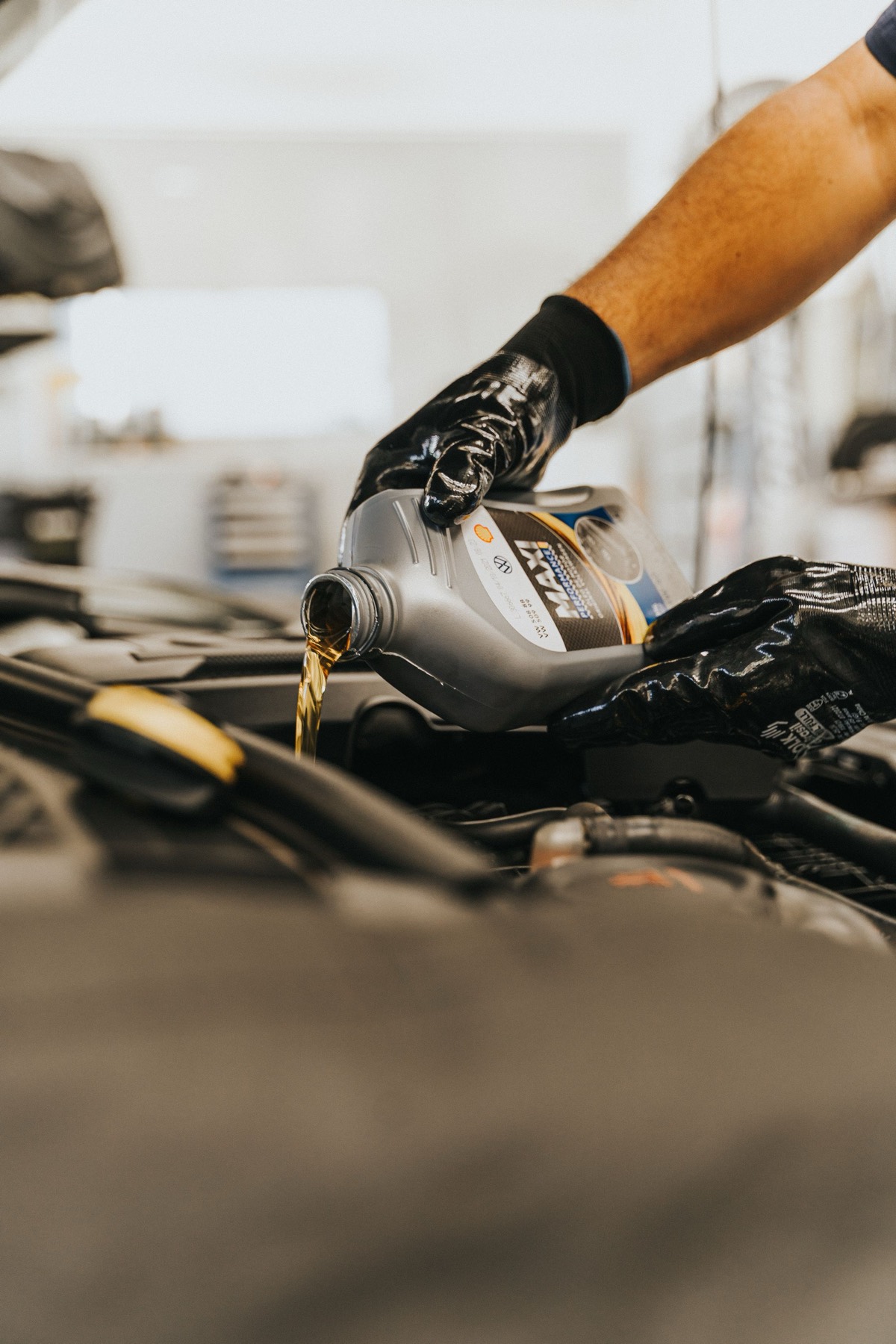
The safety-and-fluids check. Engine oil and filter, a look over brakes, tyres, steering and suspension, all lights and wipers, and the fluid levels topped up. Worth doing on any car that covers a lot of miles, tows, or spends its life on short cold journeys.
- Engine oil and oil filter
- Brake, clutch and coolant levels
- Tyre condition and pressures
- Lights, wipers, washers
- Visual brake and suspension check
- Battery and charging check
Full service
Every 12 months or 12,000 miles
Everything in the interim, plus the filters and checks that only need doing annually. This is the one that keeps a service history worth having and catches the parts that wear quietly — which is nearly all of them.
- Everything in the interim service
- Air filter and pollen/cabin filter
- Fuel filter where applicable
- Spark plugs on petrol engines, per schedule
- Brake pad and disc measurement
- Suspension, exhaust and drivetrain inspection
- Written note of what to expect next
The big-ticket items
By manufacturer schedule, not by feel
A handful of jobs are on their own clock and have nothing to do with how the car feels to drive. Ignoring these is where genuinely expensive failures come from — a snapped cambelt on an interference engine is usually a new engine.
- Cambelt (and water pump) — typically 4–5 years or 60,000–100,000 miles
- Brake fluid — usually every 2 years, it absorbs water
- Coolant — long-life, but not lifetime
- Automatic transmission fluid, where the maker specifies it
- Spark plugs and glow plugs on schedule
Intervals vary by manufacturer, engine and how the car is used — these are the common patterns, not a substitute for your handbook. Tell us the registration and we will tell you what your car's schedule actually says.
Between services
Six things worth ringing us about
A squeal that stops when you brake
That is the wear indicator on the pads touching the disc. It is telling you, politely, that you have weeks rather than months.
The steering wheel shimmying at 60
Usually wheel balance, sometimes a warped front disc. Cheap now, not cheap once it has hammered the hubs.
A whiff of sweet steam after a run
Coolant. Small leaks become overheating, and overheating becomes head gaskets.
Starting to crank slowly on cold mornings
Batteries fail in the first proper cold snap, always on a day you needed the car. A charging check takes minutes.
Oil light flickering on corners
Stop driving it. Low oil pressure will destroy an engine in a very short distance.
A new rattle over the Surrey lanes
Drop links and anti-roll bar bushes go first on our roads. They are inexpensive parts and an easy job — until something else wears with them.
Independent servicing
Servicing here does not affect your manufacturer warranty
Under EU and retained UK block exemption rules, a car still under manufacturer warranty can be serviced by an independent garage without voiding it, as long as the work follows the manufacturer's schedule and uses parts of matching quality. We keep the record, stamp the book or update the digital history, and you keep the warranty — at an independent garage's labour rate rather than a main dealer's.
If yours is a Land Rover, two of our technicians trained on them in main dealerships before joining us — more about that here.
Due a service?
Ring with the registration and current mileage and we will tell you which service your car is due, what it covers and what it costs on your vehicle.